Layout and route
- Where will equipment, deliveries, and pedestrians pass? Create clear lanes that keep barricades stable.
- Are there tight service alleys or parking decks? Shorter panel runs and modular bases fit constrained spaces.
Coastal conditions that change the plan
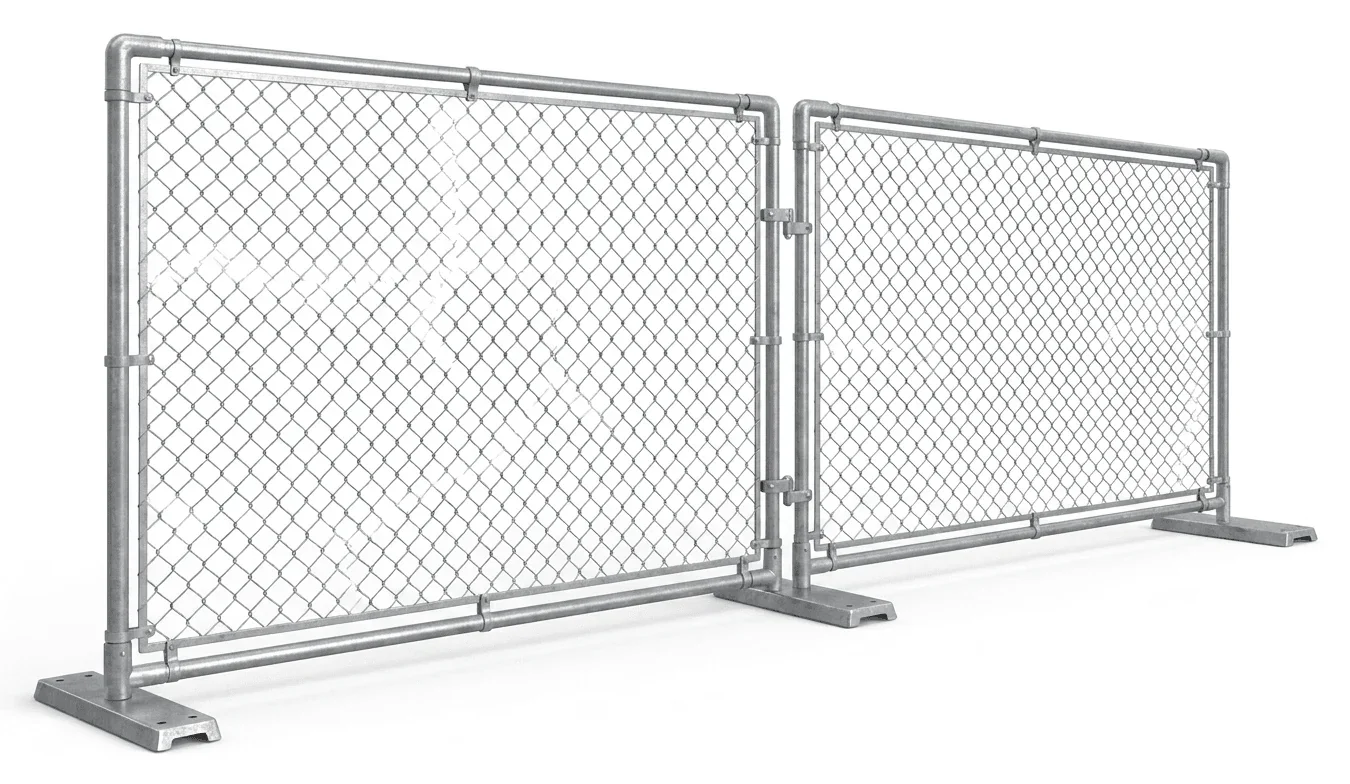
Open coastal exposure in Virginia Beach means gusty periods and corrosive salt mist. Panels with galvanized or coated finishes resist surface degradation, and site-stability factors choices should consider wet sand or soft soils after rain. In low-lying areas, plan for drainage so bases don’t sit in standing water.
Surface and footing
- Paved: weighted bases or pinned feet where allowed, maintaining ADA routes.
- Turf or sand: wider footing or ground-friendly site-stability factors to distribute load and limit sink.
- Mixed sites: transition hardware helps keep lines straight across surfaces.
Panel selection by task
- Work zones near hotels or retail: taller privacy or debris-control options for visual screening.
- Event-style crowd control: lower profile barricades for queue lines and crosswalks.
- Industrial sites: heavier panels for longer-term perimeters and equipment yards.
Coordination with other site needs
If aerial work happens near public areas, align barrier setbacks with equipment swing and travel paths: - /aerial-lift-rental/ for general comparisons - /articulating-boom-lift-rental/ where up-and-over paths cross walkways - /rough-terrain-scissor-lift-rental/ for exterior slab and compacted surfaces
Access points
Define gate widths for forklifts or delivery trucks, and place them away from pooled water or sand drift zones that can block movement after storms.
Contact
Send a sketch of intended lines, surface notes, and duration via /contact/ to refine panel and footing options.